Shanghai · Est. 2023 · Two family shops
Shanghai's big wontons,
made the old way.
Handmade whole-wheat wrappers, bone broth simmered fresh every morning, and a story that runs as deep as the city itself.
Handmade whole-wheat wrappers, bone broth simmered fresh every morning, and a story that runs as deep as the city itself.
Two fathers who stepped off the treadmill after 2020 to open a wonton shop — small, honest, handmade.
Our shops sit in Sanlin and Pujiang, where Shanghai's home-style cooking — benbang cai — actually lives.
A wonton that carries echoes of the whole country, and a fried pork chop that travelled from Vienna.
Two shops, five stories: two fathers, a name, a wonton, a pork chop, and the neighborhoods that hold them.
The years 2020–2022 changed how many in Shanghai saw the world — and they changed the two founders of Ming Cheng even more.
Both were fathers first, each with his own career and family. During the years the city stood still, one question kept coming back to them — not “how is business?” but “what are we really working for?” With life on pause, they found time again to eat with their families, to cook, to sit at the table and talk. In that slower stretch, they weighed two words more carefully: 生活 life, and 生命 living. Health. Family. And what a single bowl of hot food can mean to a tired person.
When it was over, in 2023, they didn't rush back onto the old treadmill. Instead they made a decision that must have looked strange to other people — almost too calm: to open a wonton shop together.
Not a big business. Not a chain in the making. Just a shop that makes one bowl of wontons seriously — thin skins, fresh fillings, clear broth — where anyone who walks in can sit down and eat something warm, properly.
That shop is Ming Cheng Da Wonton. It is small. But it is two fathers' new definition of a good life.
The name Míng Chéng (明诚) has two origins — and both are promises.
The first is the name itself. It takes one character from each founder's own name: two fathers, each giving one character, joined into the name of the shop. It is the simplest kind of trust between two friends — investing a piece of yourselves in one thing you mean to do for a very long time.
The second is the promise. In Chinese, 明 Míng means clear and above board — where the ingredients come from, how the prices are set, how things are made: nothing hidden. 诚 Chéng means honest dealing — earn only what is fairly earned; never cheat, never adulterate.
And these two characters happen to describe Shanghai itself. Shanghainese people value guiju — rules and reliability — and treat a promise as a bond. Since the port opened in 1843, Shanghai was where China's modern commercial civilisation first took root; generations of wharves, banks and trading houses built this city on a single idea: keep your word. What Ming Cheng hopes to keep is exactly this old, precious spirit of contract.
So “Míng Chéng” is not a name invented for marketing. It is a promise written to every guest — in black and white, clear as day.
In English, wonton gets lumped in with “Chinese dumpling”. But to the Chinese themselves, wontons were never one single thing.
Guangdong calls them wan tan (云吞) — “swallowing clouds” — because cooked wontons float in the broth like little clouds; the filling is shrimp with pork, often served over thin noodles. Sichuan calls them chao shou (抄手), wrapped like folded arms, dressed in chilli oil and sesame paste. In southern Fujian they are pian shi (扁食). And Shanghai calls them hun dun (馄饨) — pronounced hhun den in Shanghainese, which early Westerners heard and rendered as wenden: a word that belongs to this city alone.
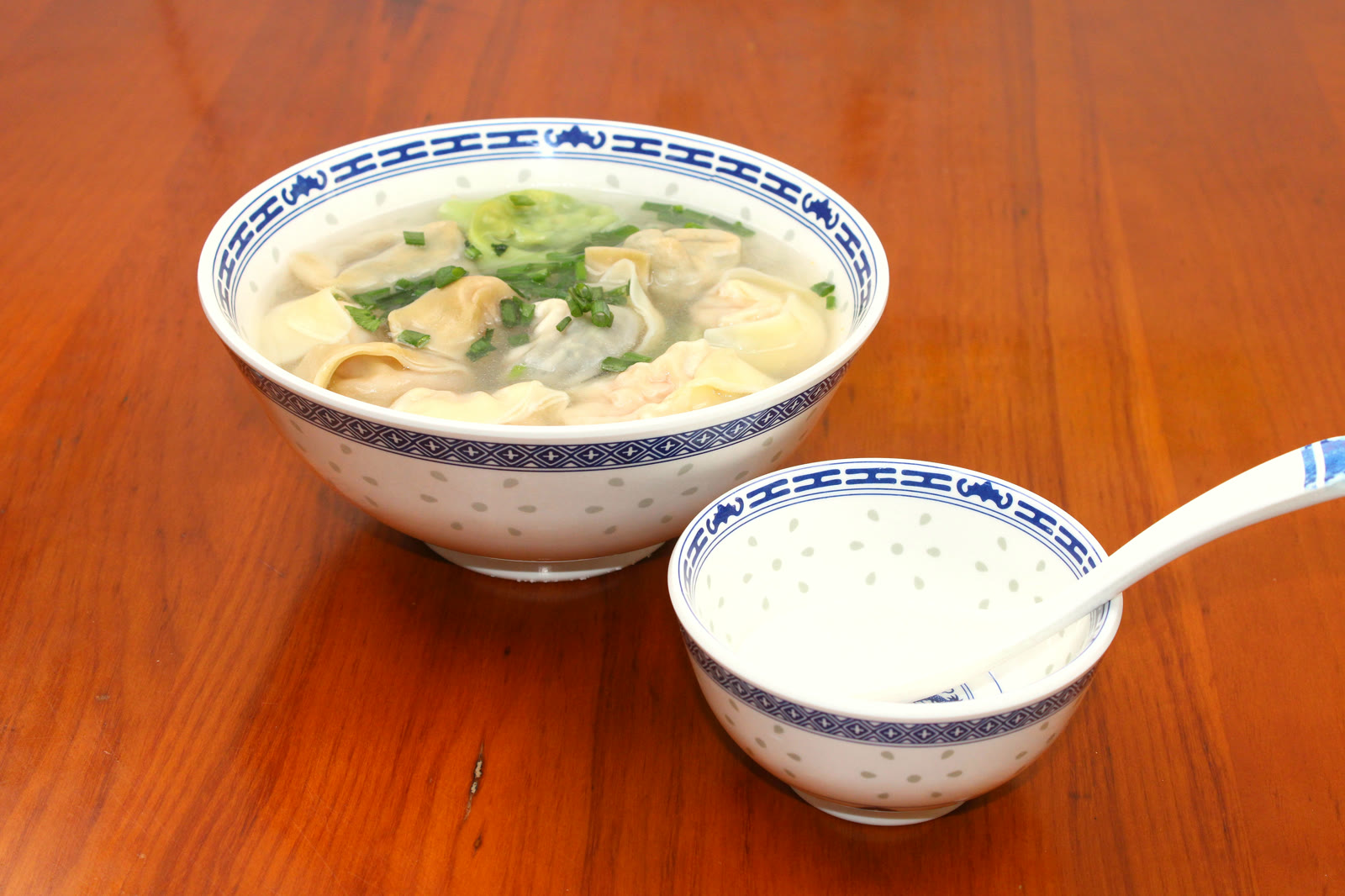
Shanghai wontons come in two sizes. Small wontons, pinched in the palm of a hand, are the snack of early mornings and late nights. Big wontons are wrapped carefully into the shape of gold ingots — thin-skinned and generously filled, cousins of Italian tortellini — and one bowl is a full meal. As for the fillings, we'll let the menu tell that story; here, one thing matters most: our broth is bone broth simmered fresh every morning, never made from instant stock.
The big wonton's roots are in the streets of Shanghai. From the late Qing dynasty through the 1920s–40s, the city's deepest nights belonged to a vendor carrying a charcoal stove on a pole — chai pan wonton (柴爿馄饨), named for the firewood that fed it — tapping bamboo boards as he walked. On one end of the pole, the stove; on the other, shelves holding wonton skins, vegetable-and-pork filling, and a few seasonings. That steaming bowl in the dark was the gentlest corner of the city.
Shanghai has always been a city that takes in everything. After the port opened, people from every region came with their own foods, and Shanghai absorbed the best of each and made it its own. Our wontons carry echoes of many places — but the root is always that one bowl of Shanghai big wonton.
The only non-wonton on our menu is a Shanghai fried pork chop. To tell its story, we have to start with a journey around the world.
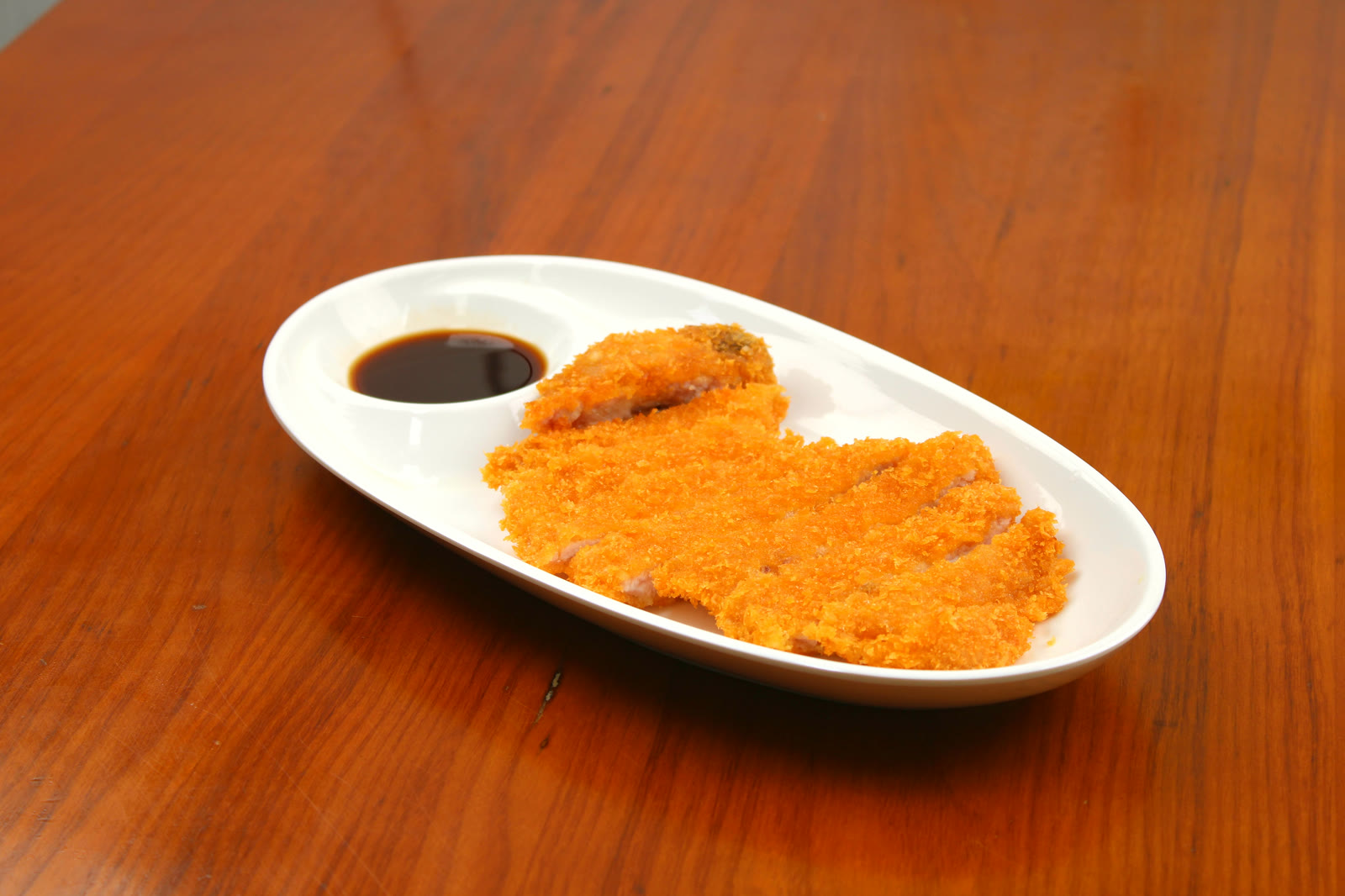
A breaded, fried cutlet set out from Vienna, Austria — the Wiener Schnitzel. It travelled east to Japan and became the thick, sweet-sauce tonkatsu. And when Shanghai's port opened in 1843, it arrived here too — reworked by the city's Western-style restaurants into a “Viennese pork chop”, and slowly into the Shanghai fried pork chop everyone knows today.
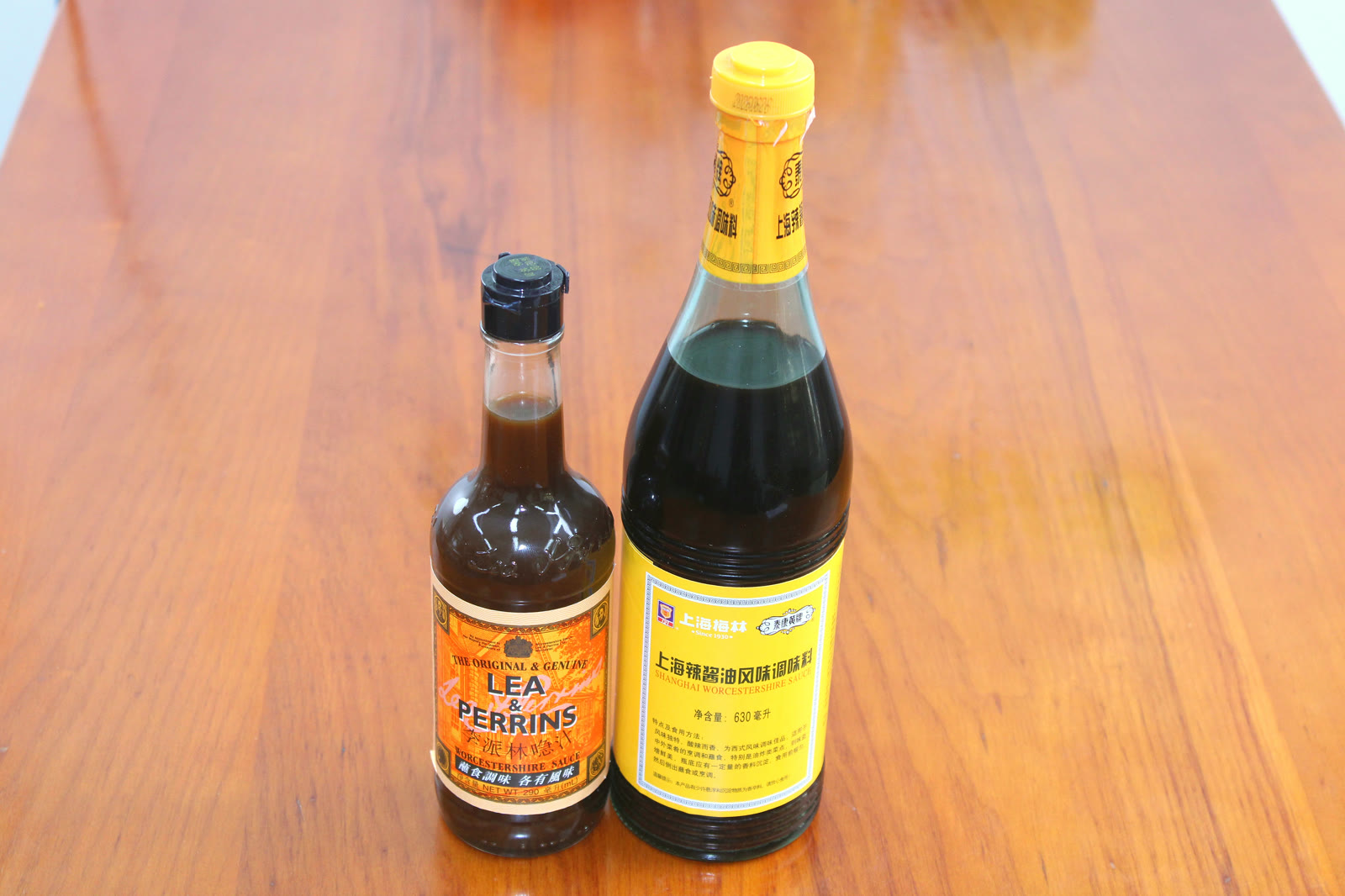
So if you know the Wiener Schnitzel, you will instantly understand our pork chop: it is the same European dish, reborn in Shanghai. The biggest difference from Japanese tonkatsu is not the meat — it is the dipping sauce. Japanese tonkatsu comes with a thick, sweet sauce; Shanghai's comes with a thin, tart “lajiangyou” (辣酱油).
And that bottle is itself a story of fusion. Despite the name, lajiangyou is not soy sauce — it descends from Worcestershire sauce, first made in Worcester, England, and known in Cantonese as gip zap (喼汁). In 1933, Shanghai's Maling company took the British sauce and made it local; Taikang later refined it into today's Taikang Yellow Label. It is tart with a hint of heat — exactly what cuts through the richness of a fried pork chop.
A European cutlet. A British sauce. Made Shanghai. That is the story we want every guest to taste: Shanghai never refuses what comes from outside — it simply turns it into its own.
Shanghai has two food maps.
One is on the west side of the river — Puxi, with its Michelin-starred restaurants, haute Western food and refined fine dining. That is the city's international face. The other runs through Sanlin in Pudong and Pujiang Town in Minhang — no glamorous decor, but where the real flavour of Shanghai lives.
We have a shop in Sanlin. Sanlin is one of the ancestral homes of Shanghai's home-style cooking (benbang cai). Here, a guild of village chefs called the “chandao bang” (铲刀帮) once walked together into old Shanghai and carried the folk flavours of Pudong into what became benbang cai. Sanlin is also the township with the most intangible-heritage listings in all of Shanghai — benbang cooking, porcelain carving, embroidery, and the old Sanlin Tang street with its Ming-and-Qing architecture. In 2026, the Michelin Guide gave a Bib Gourmand (“quality food at a fair price”) to A Yong Noodle Shop nearby — a modest shop selling boiled mutton. In this neighbourhood, even Michelin honours the food of the people, not the food of fine dining.
We also have a shop in Pujiang Town. Many of its residents moved here from central Shanghai's old lanes — they left the alleys they had lived in for decades and settled in new communities. Furniture can be moved; the taste of memory cannot. Our shop wants to give them one bowl of “the taste of before”: a familiar bowl of big wontons, a fried pork chop dipped in lajiangyou — and for a moment, it feels like going home.
So why these two places? Because the real taste of Shanghai was never on a fine-dining table. It lives among the people — plain food, food with memory. That is what we serve. So that is where we opened our shops.
No machines, no pre-made trays from a factory. Every wonton is wrapped by hand, in the shop, the same way it's been done for generations — so they go from our hands to your bowl the same day.
Every wrapper is our own custom whole-wheat skin (10×10 cm, made to order) — more resilient than white-flour wrappers, they hold together in the broth without ever falling apart, with a touch more fibre in every bite.
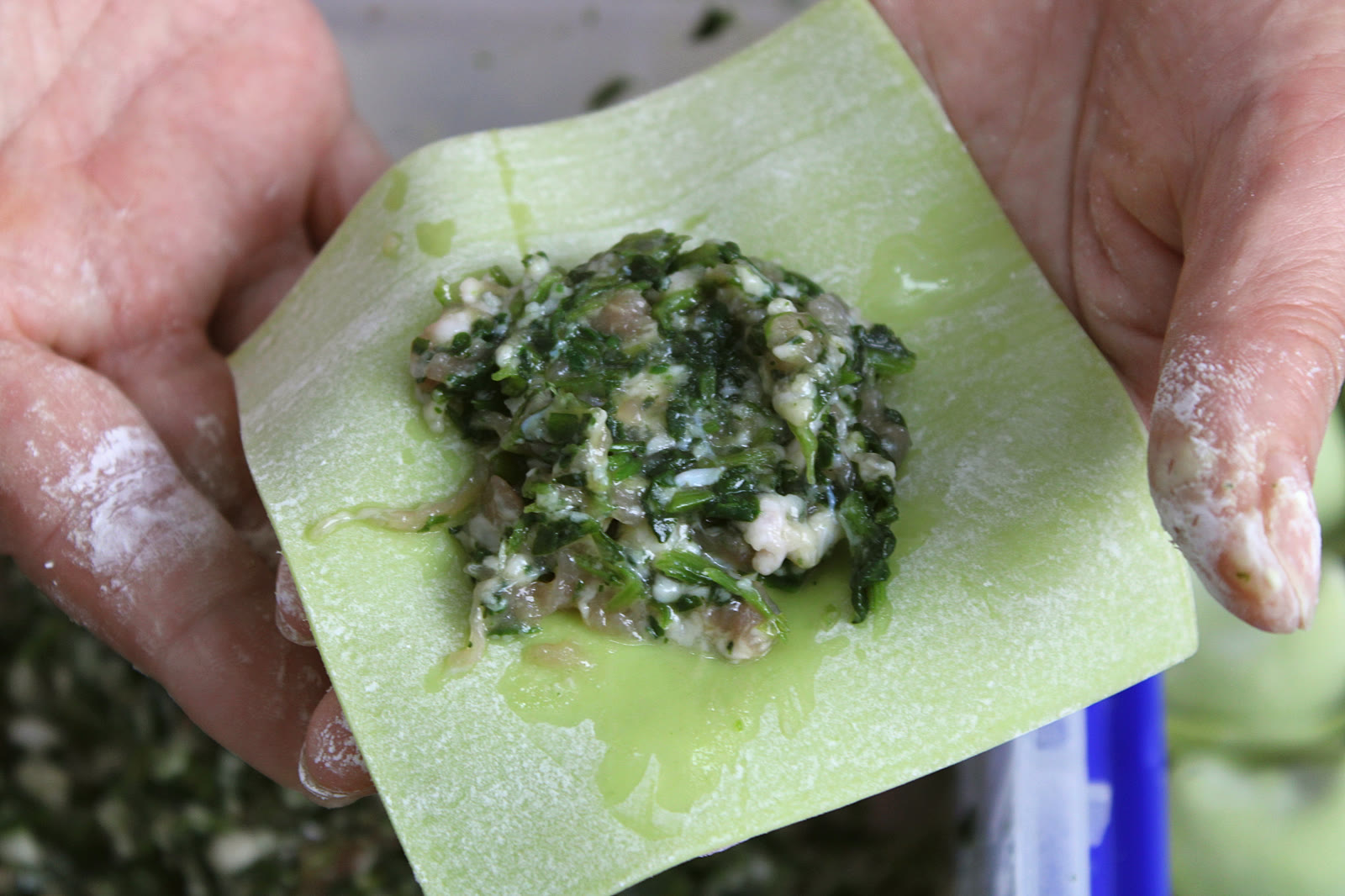
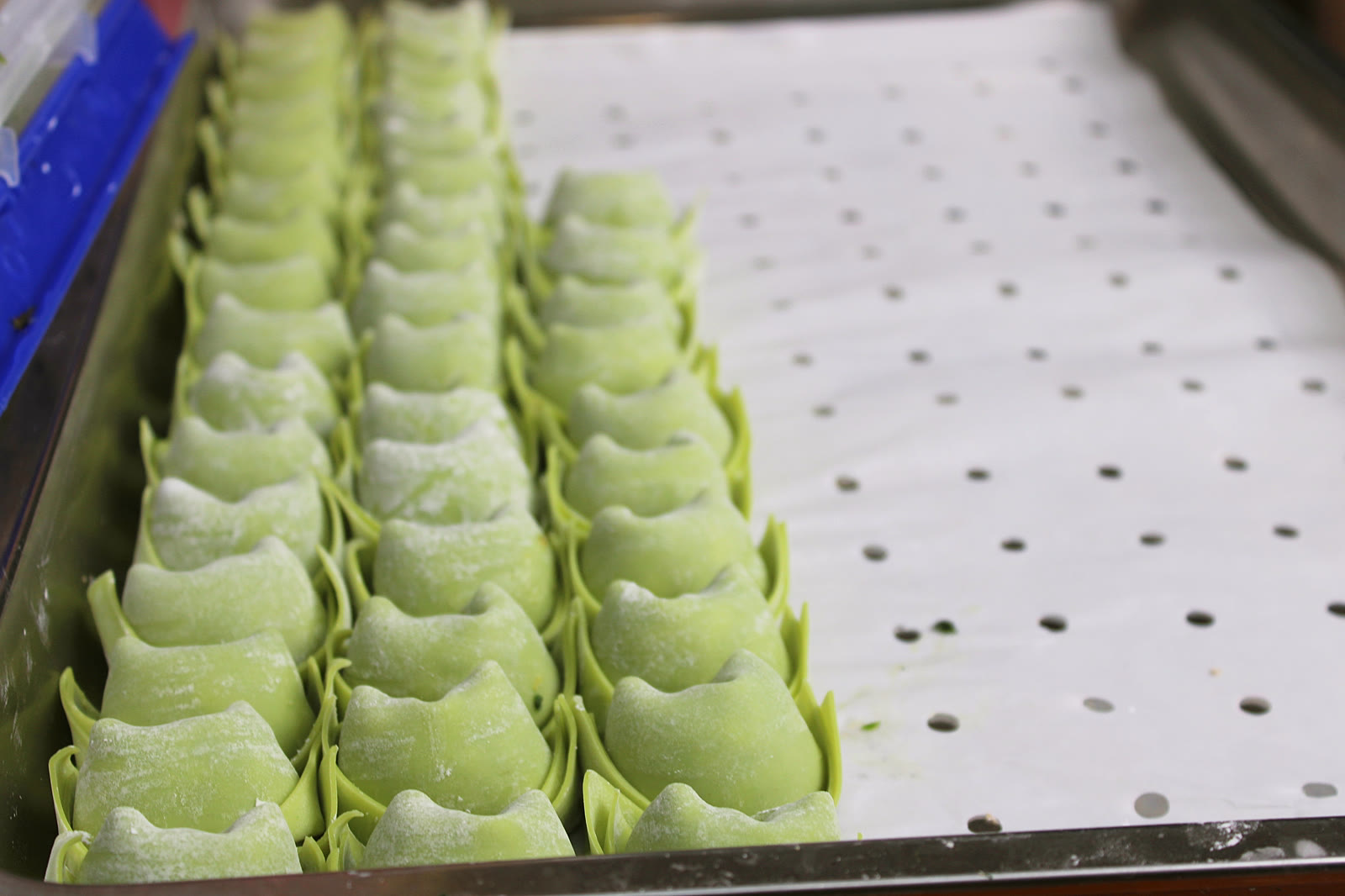
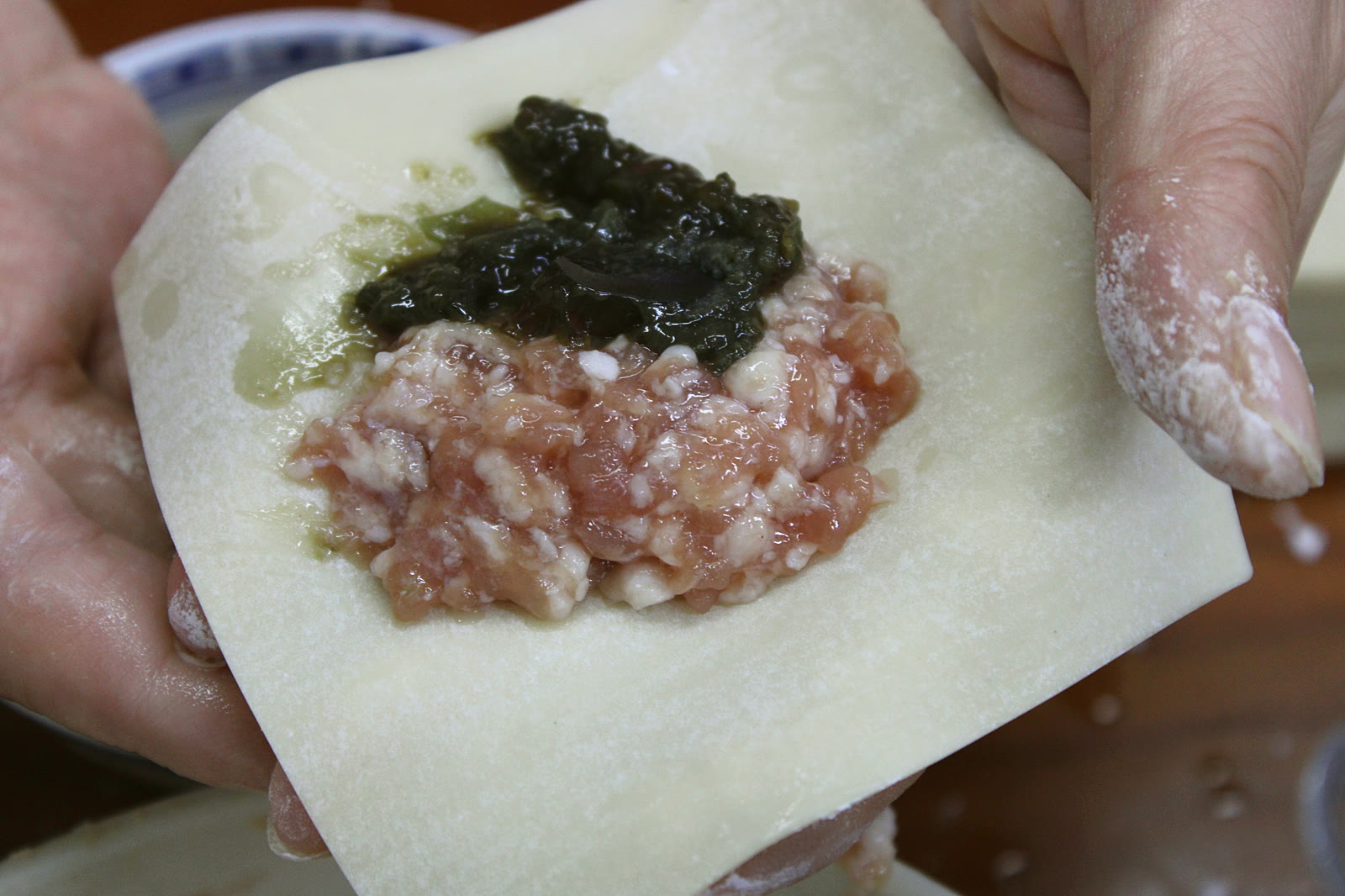
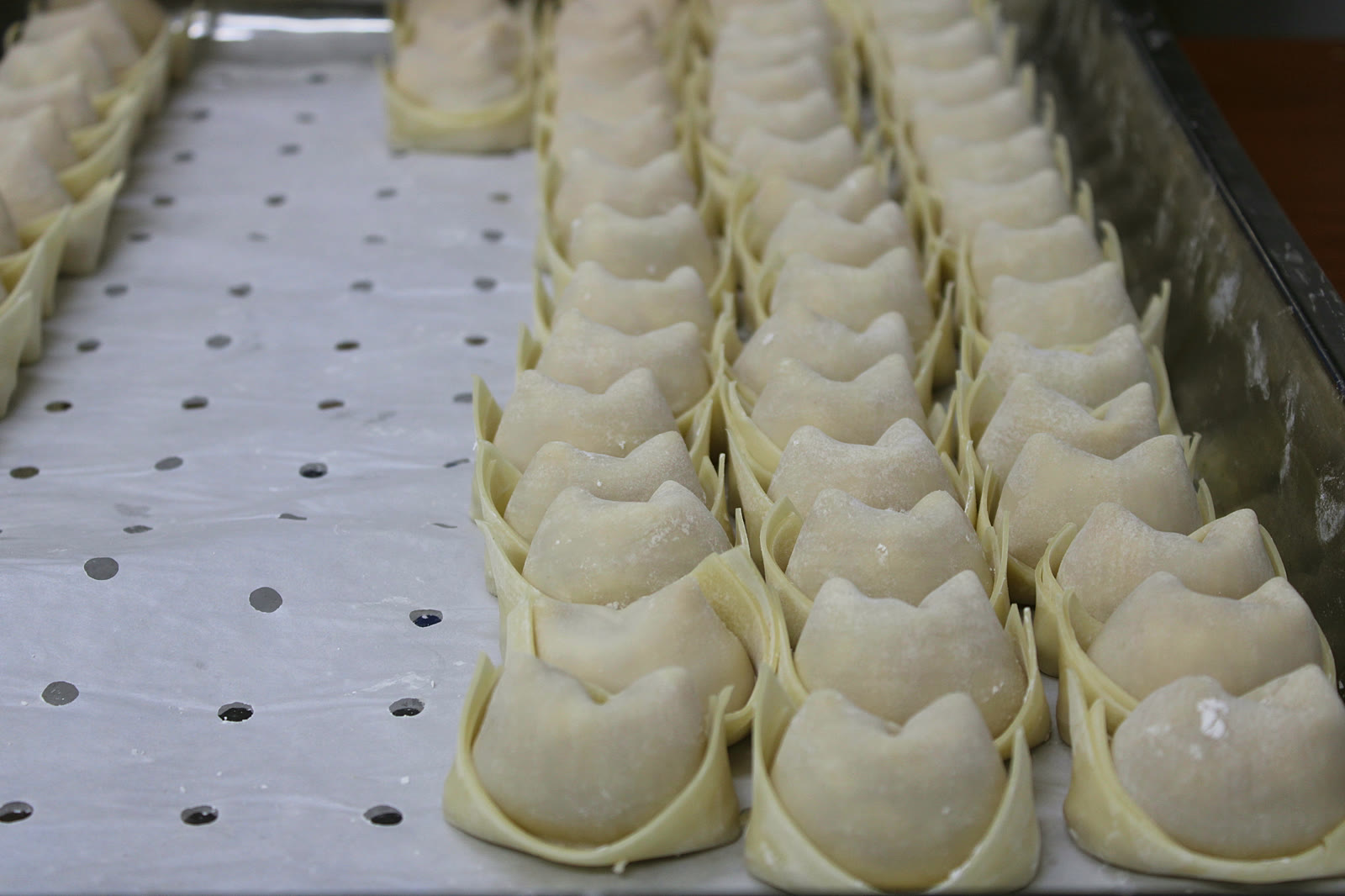
Custom whole-wheat wrappers (10×10 cm) — more resilient, they never fall apart in the broth. All prices in Chinese yuan (CNY). Nutrition values are approximate estimates.
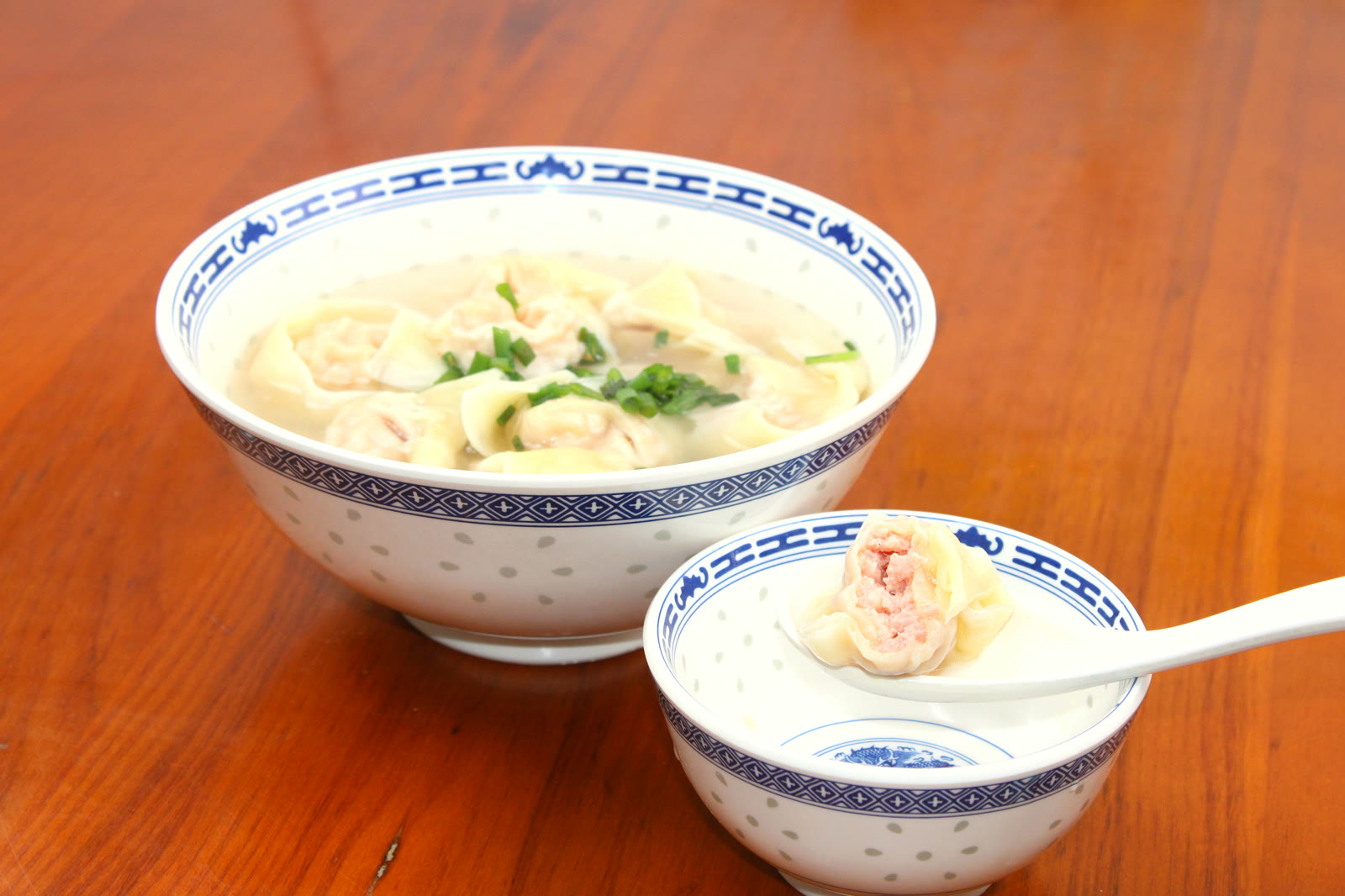
The classic — seasoned minced pork, firm and juicy, in rich bone broth.
Whole-wheat wrapper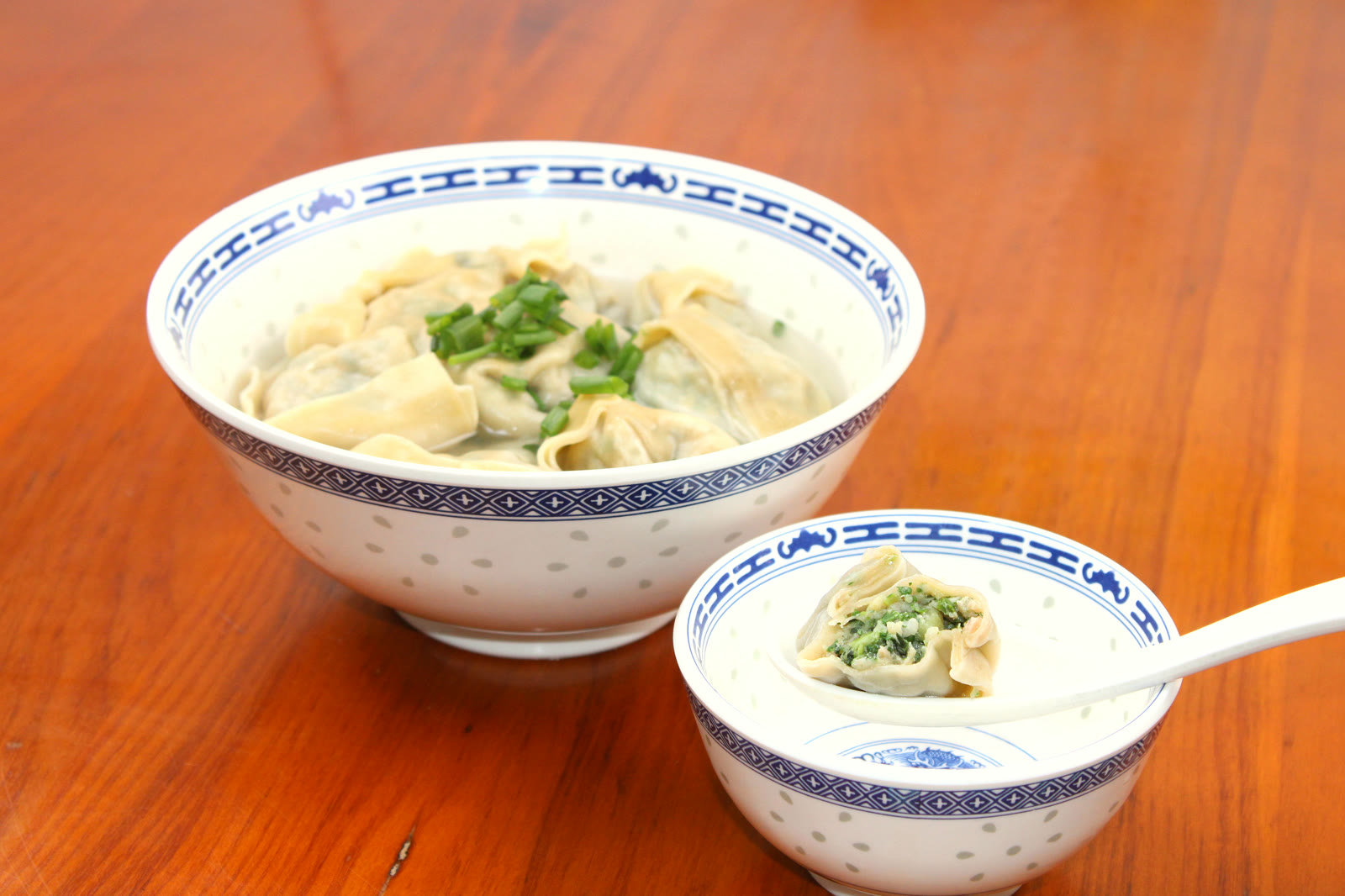
Wild greens of the season folded into pork — fresh, crisp, aromatic.
Whole-wheat wrapper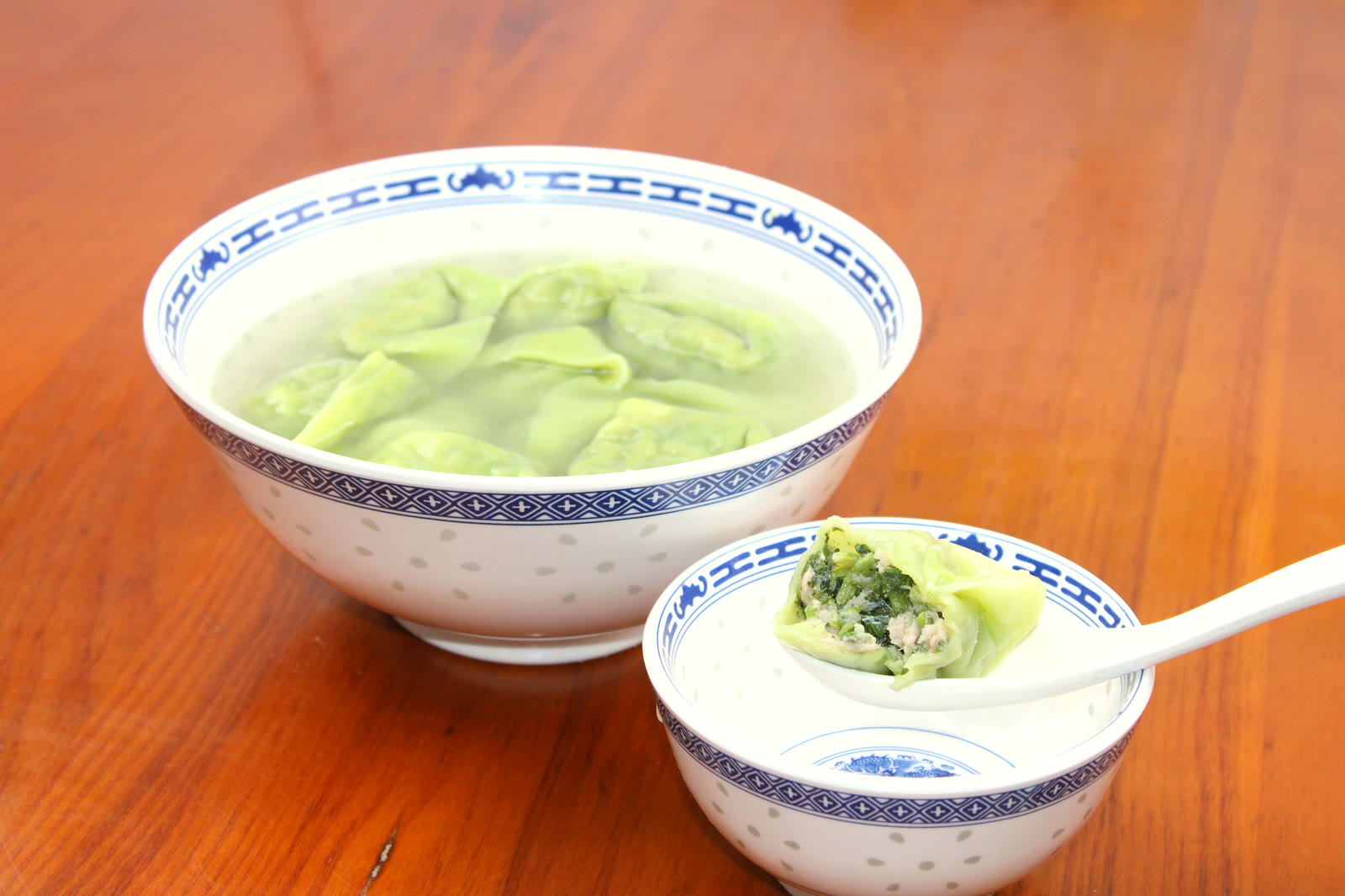
Celery-flecked filling in a naturally green wrapper, tinted with fresh celery juice.
Whole-wheat wrapper Green wrapper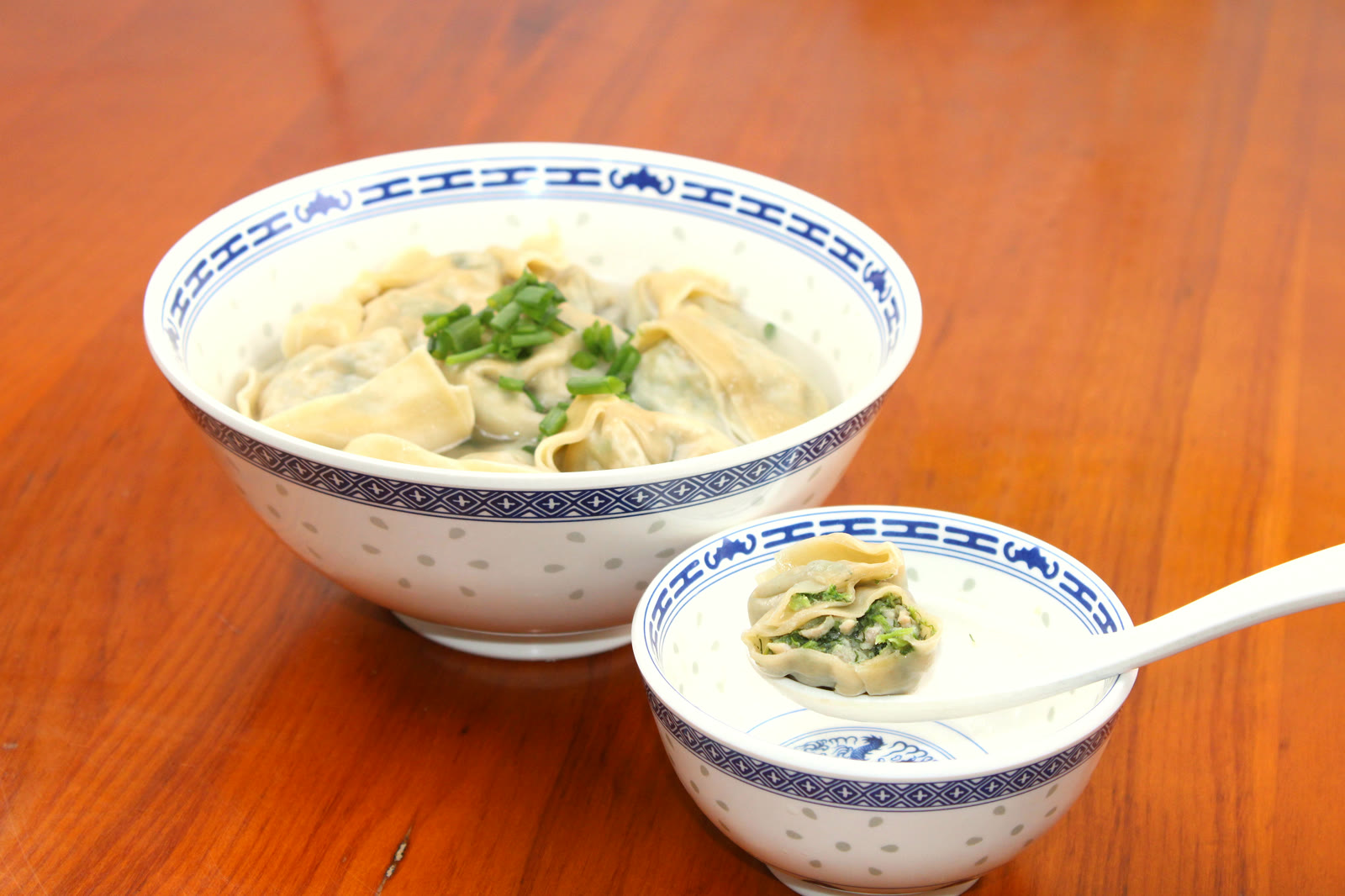
Fresh fennel fronds bring a clean, fragrant lift to the pork.
Whole-wheat wrapper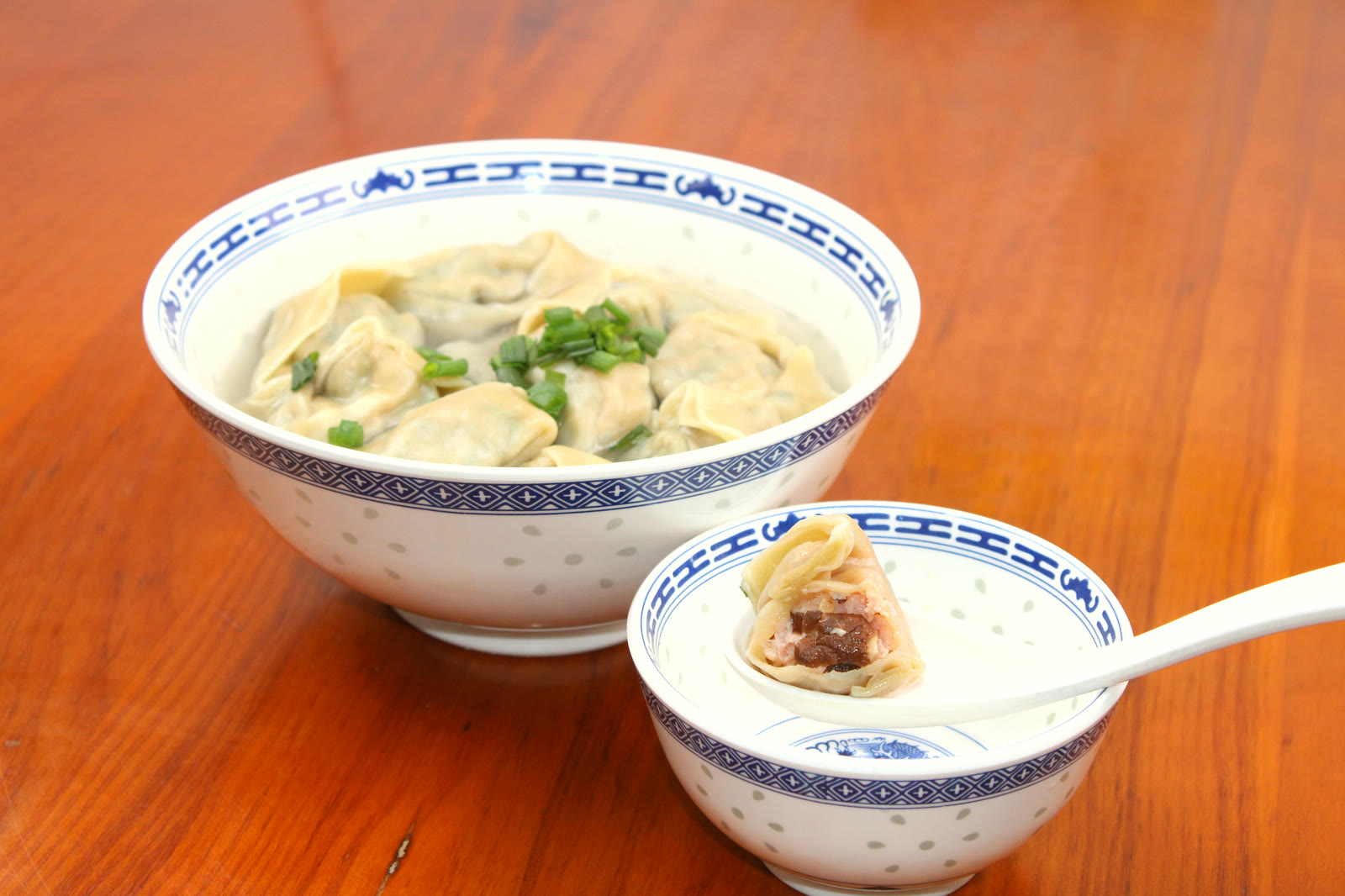
Pan-fried shiitake for a deep, savoury, woodsy umami.
Whole-wheat wrapper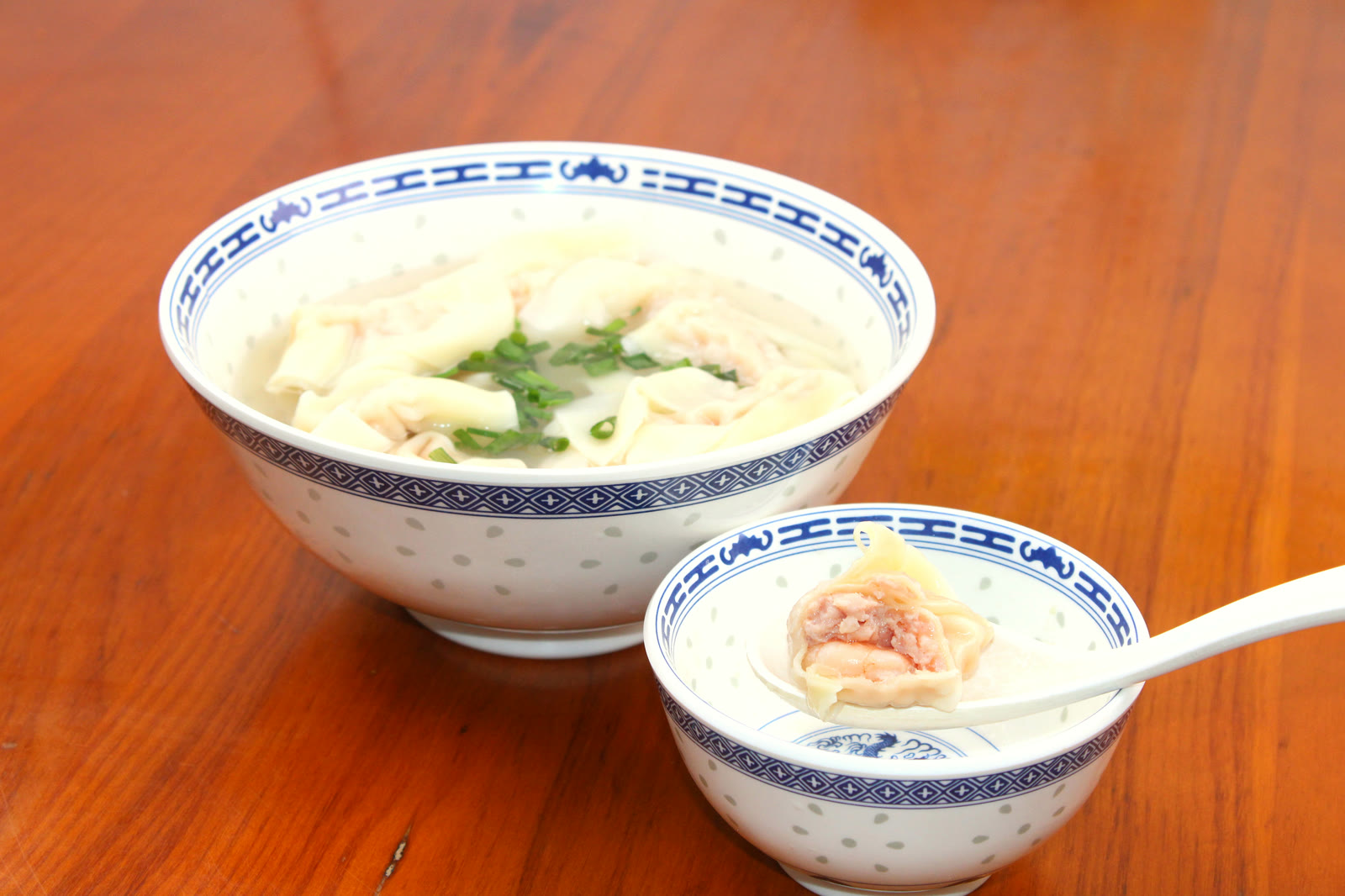
Whole shrimp with pork — light, sweet, high-protein.
Whole-wheat wrapper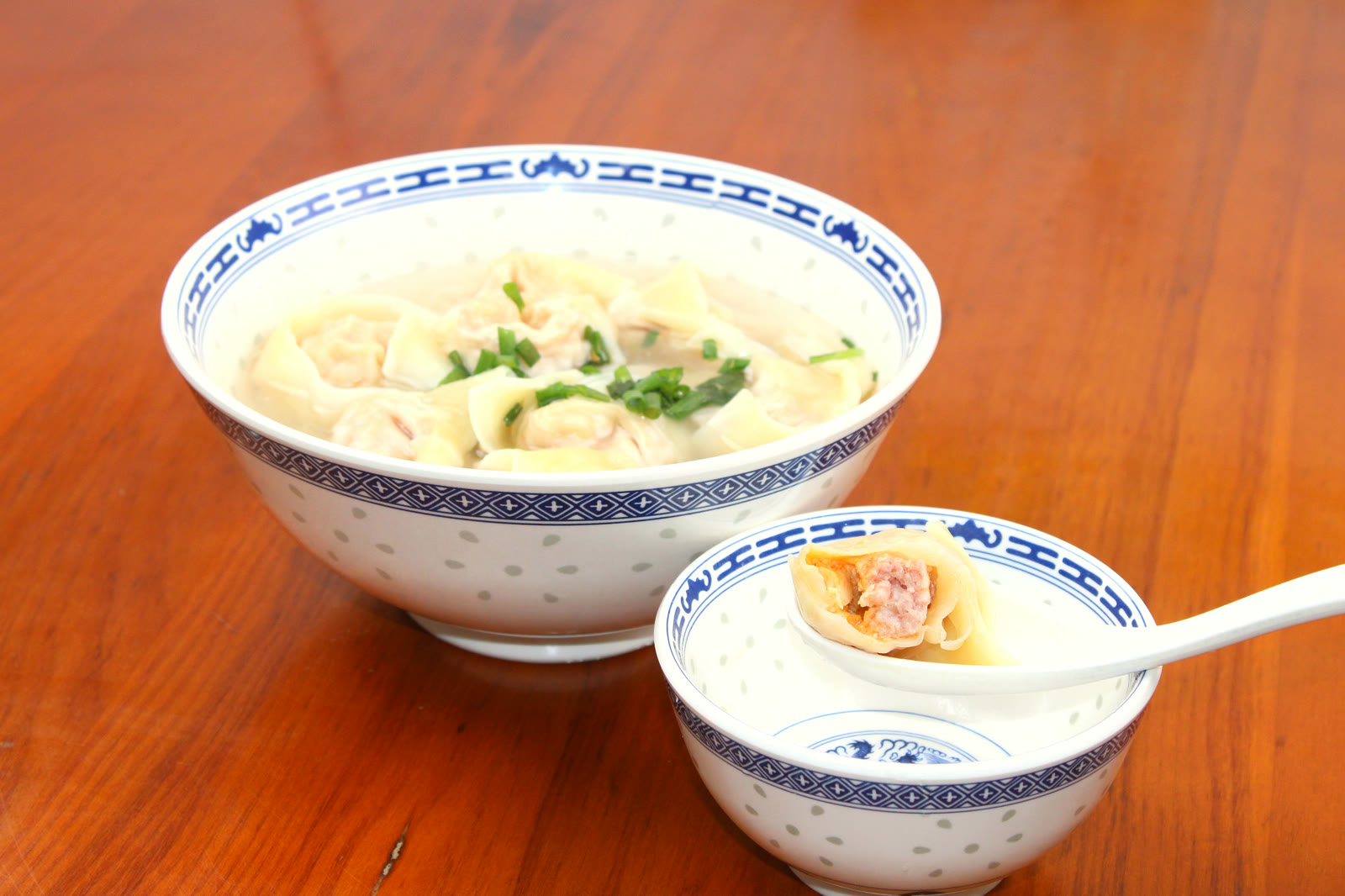
Crumbled salted egg yolk — rich, sandy, savoury. A local favourite.
Whole-wheat wrapper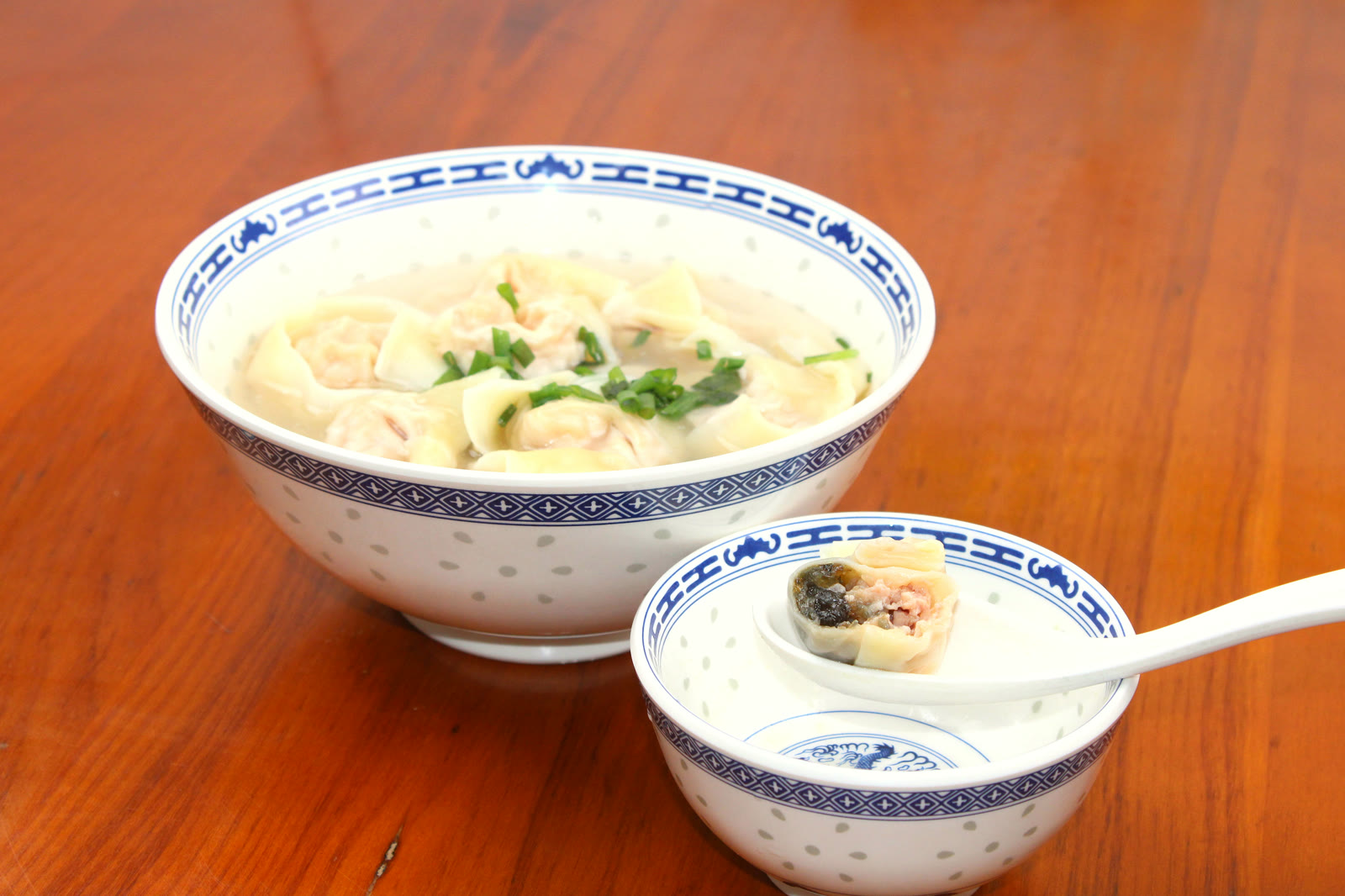
Diced century egg for a bold, distinctive depth of flavour.
Whole-wheat wrapperSeveral fillings in one bowl — for those who want a taste of everything.
Whole-wheat wrapper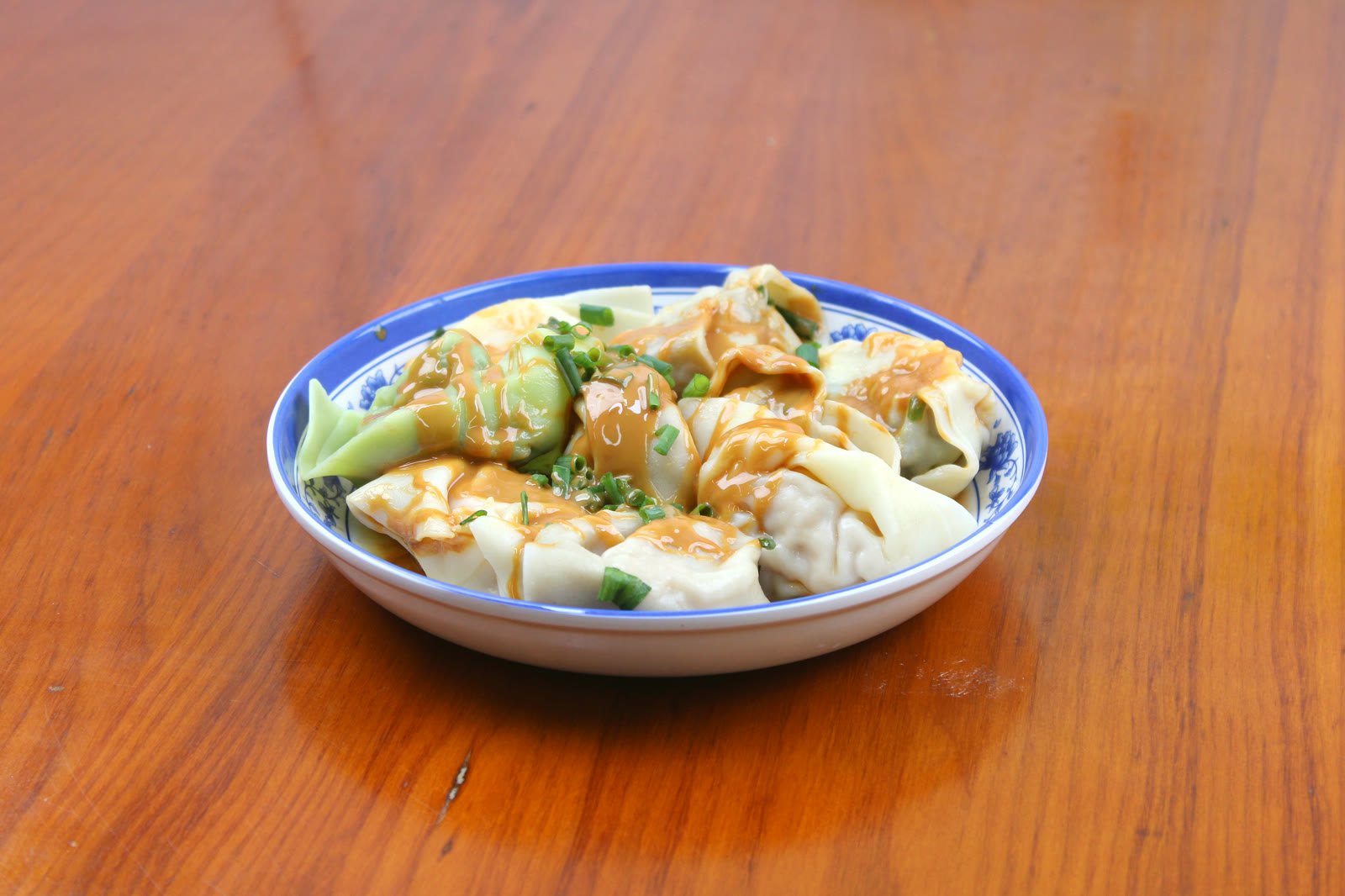
Wontons tossed in fragrant sesame paste with vinegar — served dry.
Whole-wheat wrapper Not in brothTenderised pork chop, breaded and fried crisp — dipped in Shanghai's own lajiangyou Worcestershire.
Read its story
The full Míng Chéng experience: 12 assorted wontons in broth plus one Shanghai fried pork chop with lajiangyou. Ordered separately: CNY 39 — as a set, you save CNY 9.1.
Shanghai's summer classic — shepherd's purse & pork wontons, boiled then chilled, served with your choice of dressing. Available every summer, June to September (每年6–9月供应).
Dressing: sesame paste + CNY 1, or free with vinegar, soy sauce & chilli oil — mix your own. (自选:+1元加麻酱,或免费配醋/酱油/辣油)
Our wontons are made fresh every day — and you can buy them raw, straight from the shop, to cook at home in minutes. Same whole-wheat wrappers, same fillings, same broth recipe (we'll even tell you how to make the stock).
Boxes are 12 wontons each, at the same prices as in the shop.
| Pork | CNY 24 |
| Pork & Shepherd's Purse (荠菜) | CNY 19 |
| Pork & Celery, green wrapper (芹菜) | CNY 21 |
| Pork & Fennel (茴香) | CNY 21 |
| Pork & Shiitake (香菇) | CNY 26 |
| Pork & Shrimp (虾仁) | CNY 33 |
| Pork & Salted Egg Yolk (咸蛋黄) | CNY 28 |
| Pork & Century Egg (皮蛋) | CNY 28 |
| Mixed box / 全家福 | CNY 24 |
Your 4 boxes are ranked from most expensive to cheapest, then the deal applies in that order.
…and if the 4th box (the cheapest one) is Shepherd's Purse (荠菜), box 4 costs just CNY 1.
If the cheapest box isn't Shepherd's Purse, the deal becomes buy 3 boxes, get 1 free — the lowest-priced of your 4 boxes is free.
Example (Deal A): Celery 芹菜 21 + Shepherd's Purse 荠菜 19 + 荠菜 19 + 荠菜 19 → ranked 21, 19, 19, 19 → box1 21 + box2 19 + box3 half 9.5 + box4 (荠菜) CNY 1 = CNY 50.5.
Boxed right after wrapping. Take them home the same day, or freeze for later.
Freeze uncooked in a single layer. To cook: bring a large pot of water (about 3 L) to a rolling boil, drop in the wontons and stir gently. Every time the water comes back to a boil, add a small cup of cold water — repeat 3 times (the Shanghai way). They're ready when they float and the skin turns translucent — about 10–12 minutes in total. Frozen wontons may need a minute or two more. Serve with our broth base (available at the counter) or any stock you like.
💡 Prefer delivery? Message us on WhatsApp (+852 9571 9279) — we'll pack your boxes and have them ready for pickup, or arrange a nearby courier.
Where the real Shanghai eats.
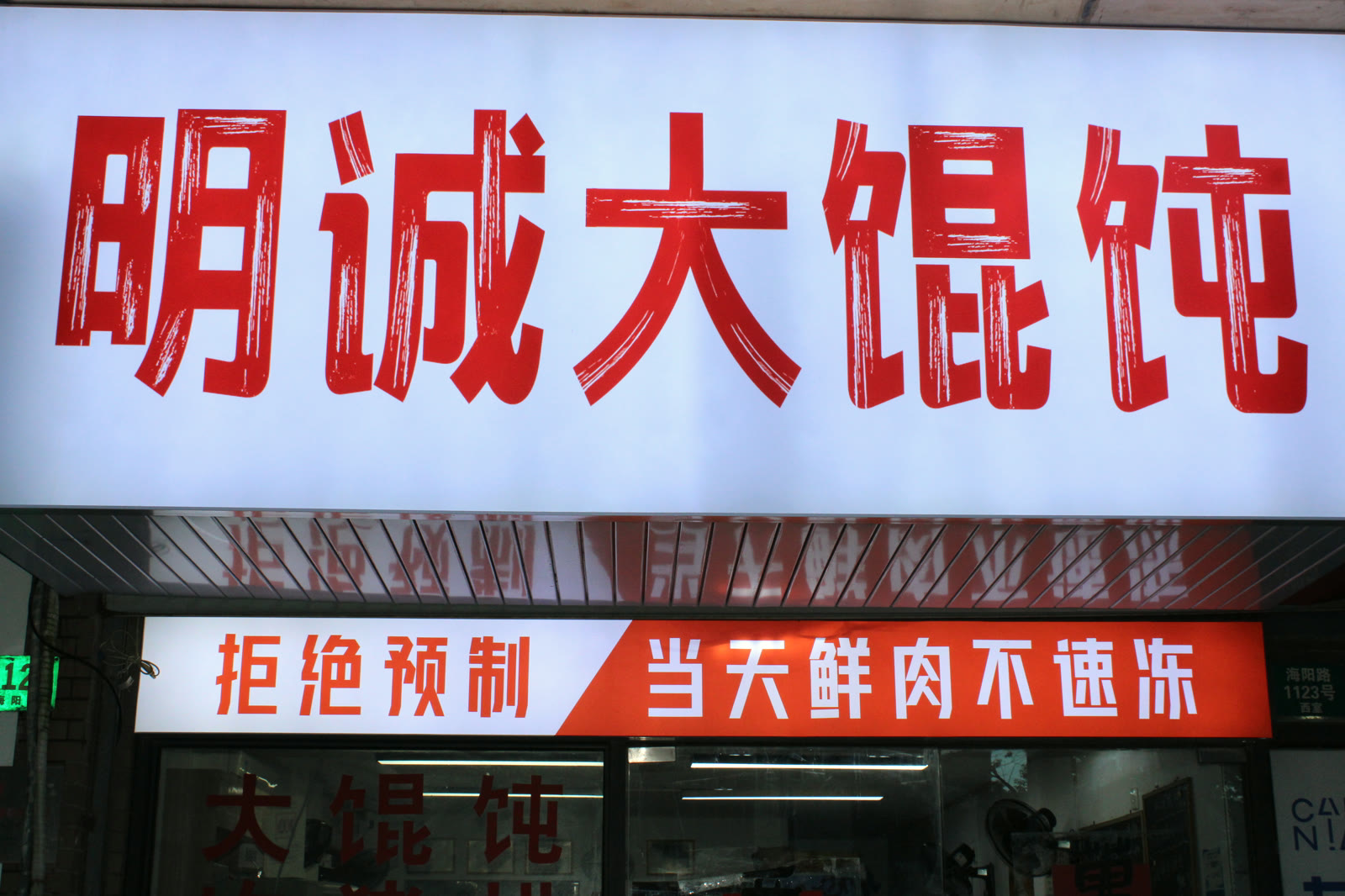
Home-style cooking's ancestral ground.
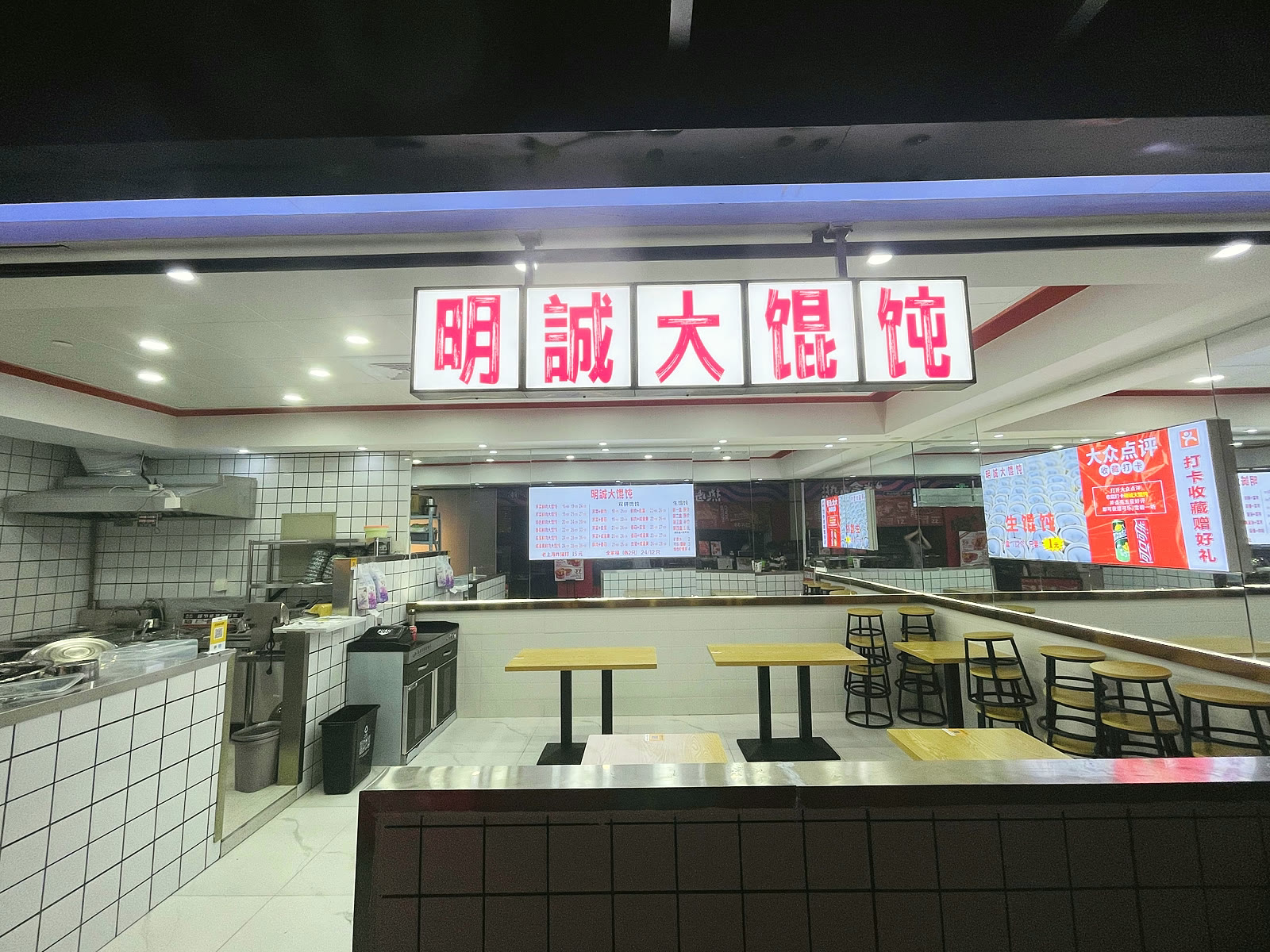
The taste of home for a relocated neighbourhood.
How to book, how to pay, how to order — the practical side, in plain English.
Alipay & WeChat Pay both accept international cards — just link your Visa or Mastercard in the app. Contactless POS is also available.
We have bilingual menus in Chinese & English. Order on an iPad, or scan the QR code — the ordering mini-program is bilingual too.
Walk-ins welcome. For groups, book below or message us on WhatsApp.
Most wontons contain pork. Ask us about the day's options — we're happy to help.
* Estimated per recipe, not lab-tested. Nutrition may vary with actual portions.